How do you allocate utility costs fairly in a shopping centre (and stop the arguments)?
Uudised
•

Sisukord
Ole esimene kes kuuleb uutest projektidest ja uudistest
To start off, why are shared utility costs so contested in retail property? Because the consumption differences are extreme and visible. A restaurant's kitchen extraction, a supermarket's refrigeration and a small fashion unit's lighting have almost nothing in common - and every tenant can see the others operating.
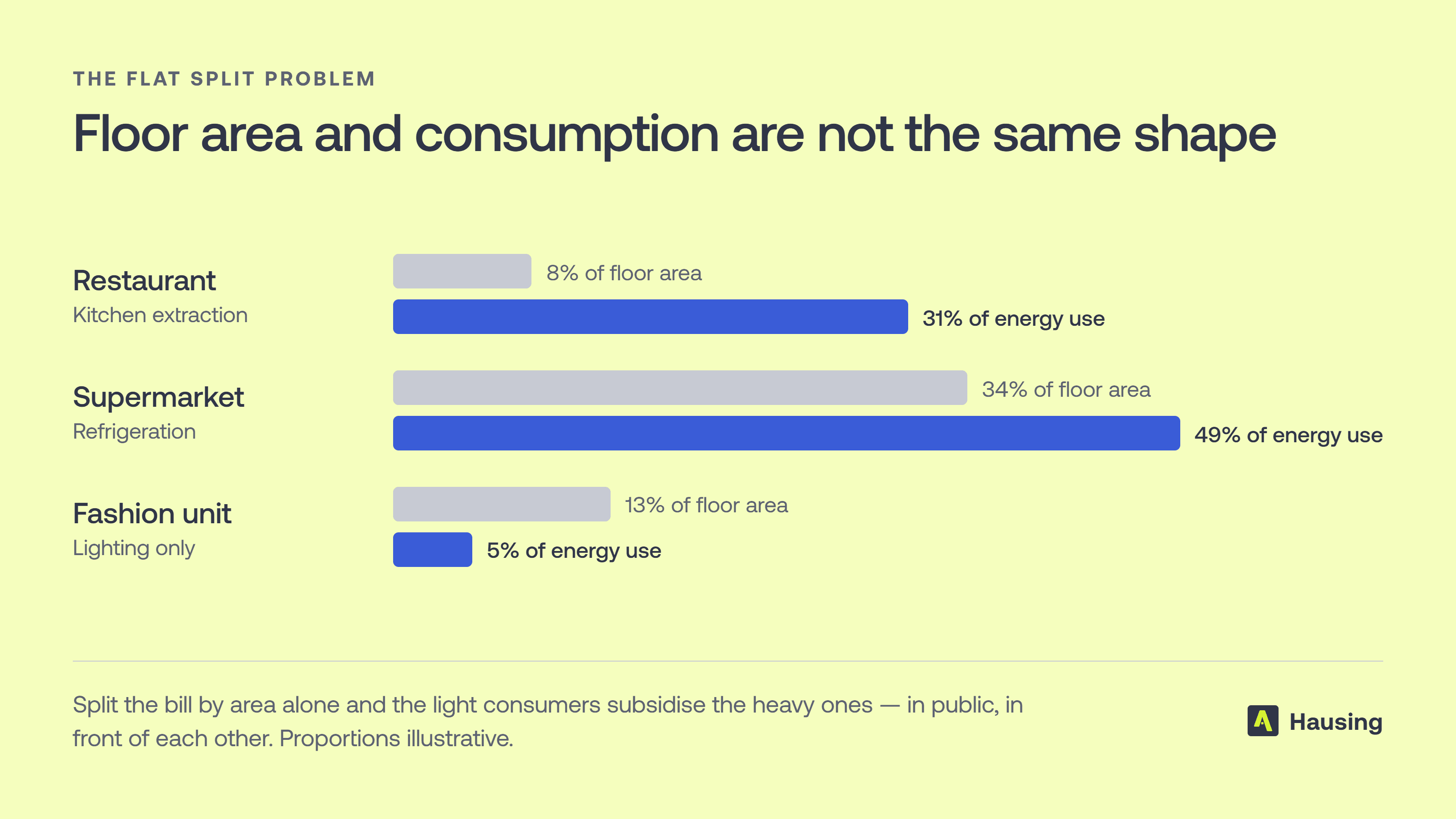
When the allocation is a flat split by floor area, the light consumers know they are subsidising the heavy ones. When the method is opaque, everyone assumes they are the one subsidising.
The consequence is predictable: cost queries, delayed payments, service charge disputes, and a residue of distrust that surfaces in every renewal negotiation.
What makes a utility allocation method fair?
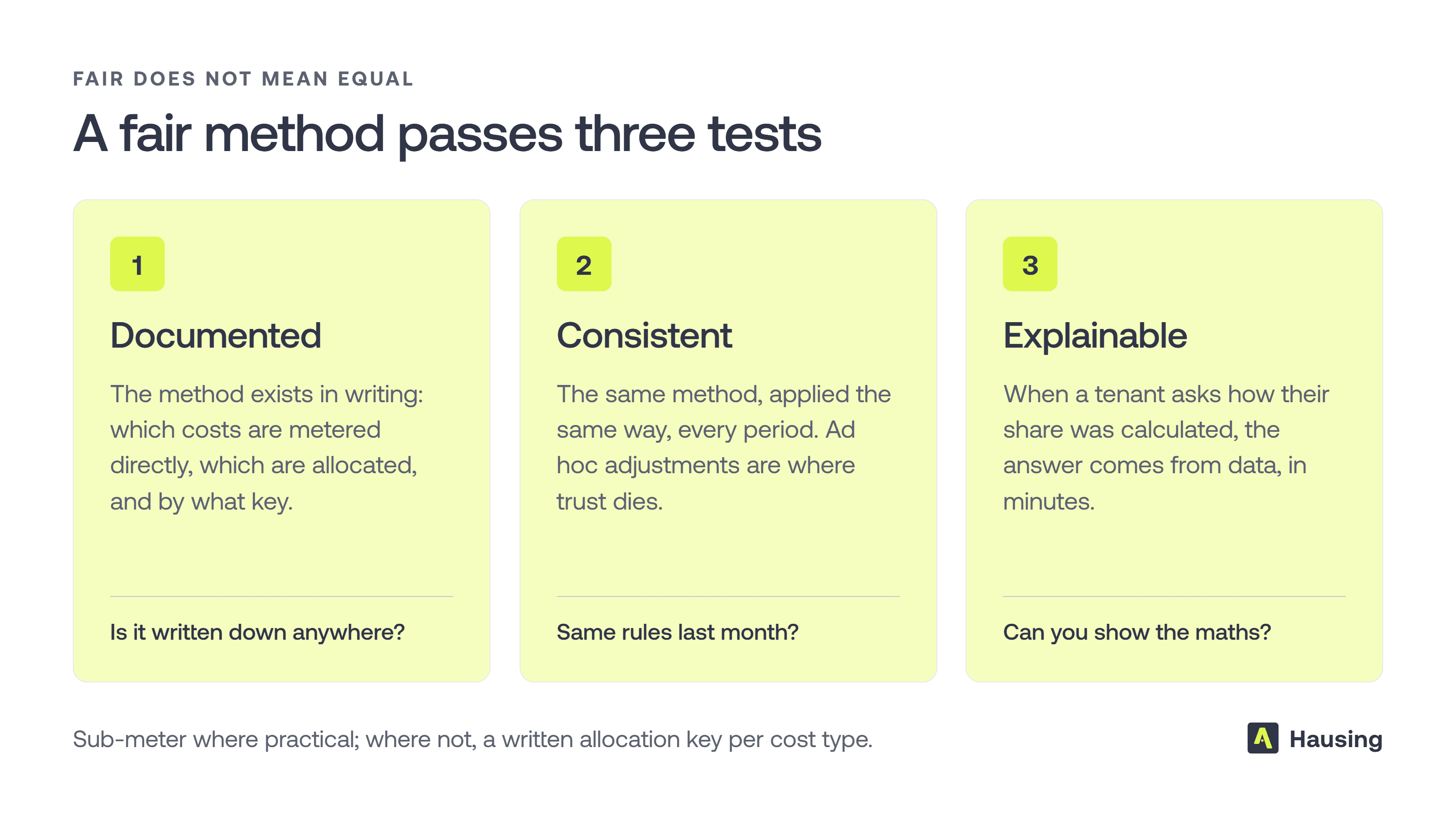
Fair does not mean equal. It means three things:
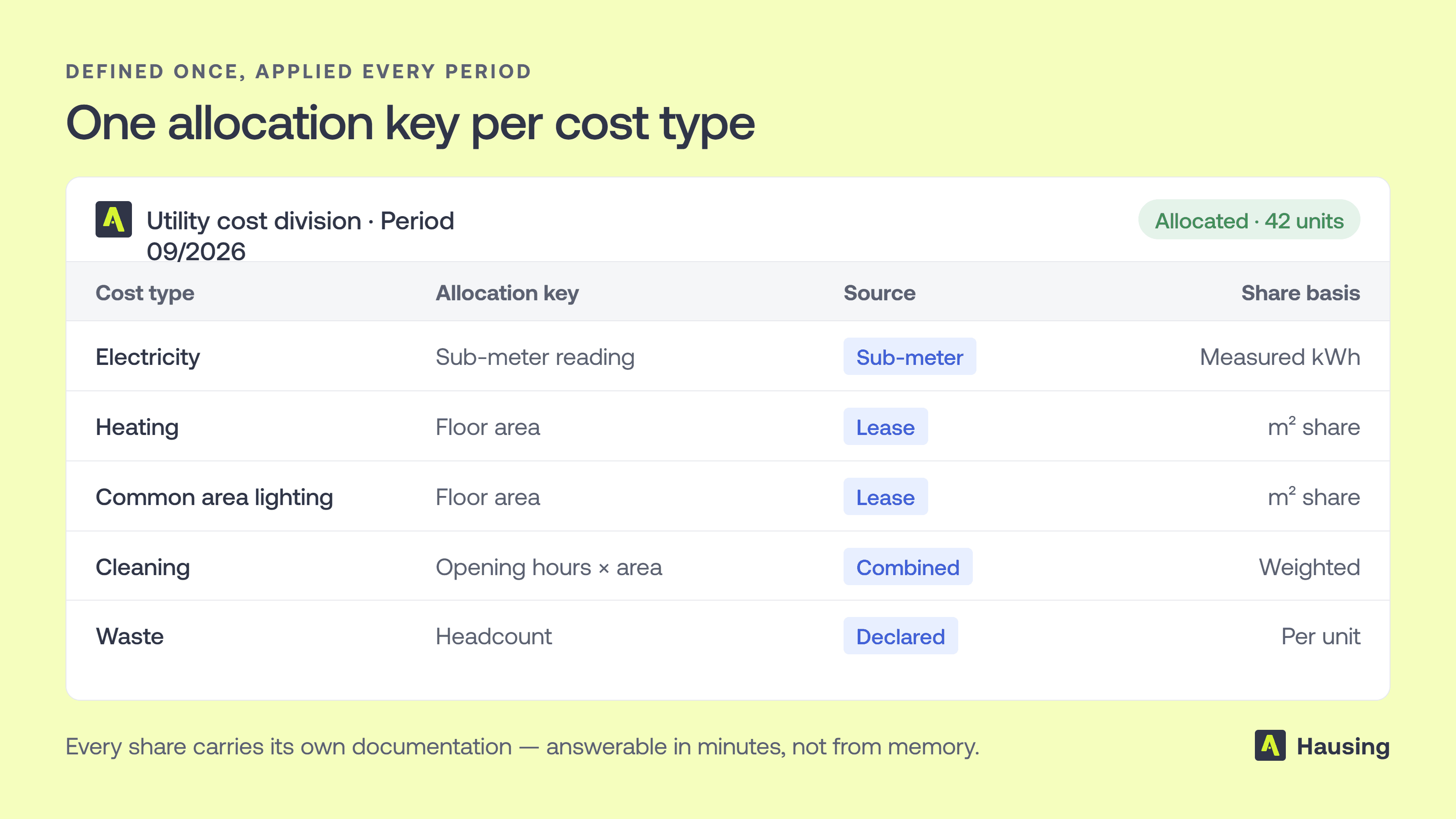
Documented. The method exists in writing: which costs are metered directly, which are allocated, and by what key - floor area, sub-meter readings, opening hours, headcount or a combination per cost type.
Consistent. The same method, applied the same way, every period. Ad hoc adjustments are where trust dies.
Explainable. When a tenant asks "how was my share calculated?", the answer comes from data, in minutes - not reconstructed from someone's memory of what was decided.
Sub-metering is the gold standard where it is practical, because measured consumption ends most arguments before they start. Where sub-metering is not feasible, a documented allocation key per cost type is the next best thing - and the documentation matters as much as the key itself.
Why does this go wrong in practice?
Because in most portfolios the allocation lives in a spreadsheet that one person understands. Complex splits across dozens of units, different keys per cost type, mid-period tenant changes and vacancy adjustments - all handled manually, every single month.
It is slow, error-prone, and completely dependent on that one person being available and right.
BLRT, the industrial holding whose property arm manages the Noblessner Port City district in Tallinn, lived this exact pattern: producing invoices and utility calculations took a full week every month, and when the colleague who ran the spreadsheets left, nobody else could follow her system.
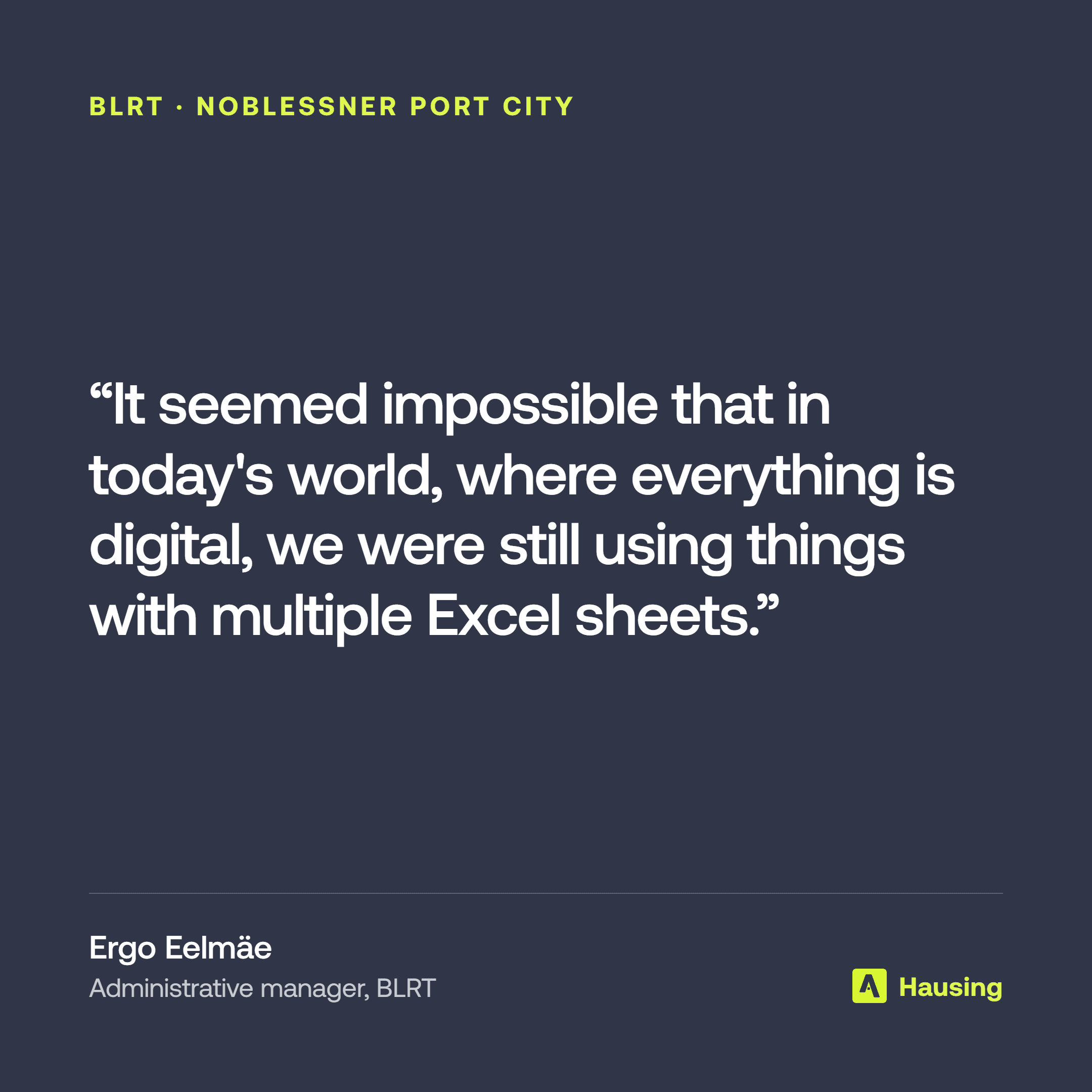
As their administrative manager Ergo Eelmäe put it: "It seemed impossible that in today's world, where everything is digital, we were still using things with multiple Excel sheets."
The errors are the most expensive part. One misallocated invoice, discovered by a tenant, does more damage to trust than a year of correct ones builds.
How does software change utility allocation?
Hausing's utility cost division was built for commercial and mixed-use property, where complex allocations are the norm rather than the exception.
You define the method per cost type once - the platform then allocates each period's costs across units automatically and produces the documentation behind every tenant's share.
Mairo from Cesana described the practical effect: "The system is user-friendly and easy to implement. Thanks to Hausing, the distribution of utility costs is made very easy, and it saves me the most valuable time."
The time savings are not marginal. After moving its utility and lease management into Hausing, BLRT's week of monthly allocation work shrank dramatically. "Tasks that once took a week are now completed much faster. This freed-up time can now be used for more important assignments," said Ergo. Read the full BLRT case study.
The result is not only saved hours. It is that every allocation becomes explainable on demand - which changes cost conversations with tenants from arguments into confirmations. Across its customers, Hausing processes invoices, including rent, worth over €8 million every month, so the allocation engine is exercised at serious volume.
Fair costs are one part of a bigger picture. See how Hausing shapes the full shopping centre tenant experience.
Where should you start?
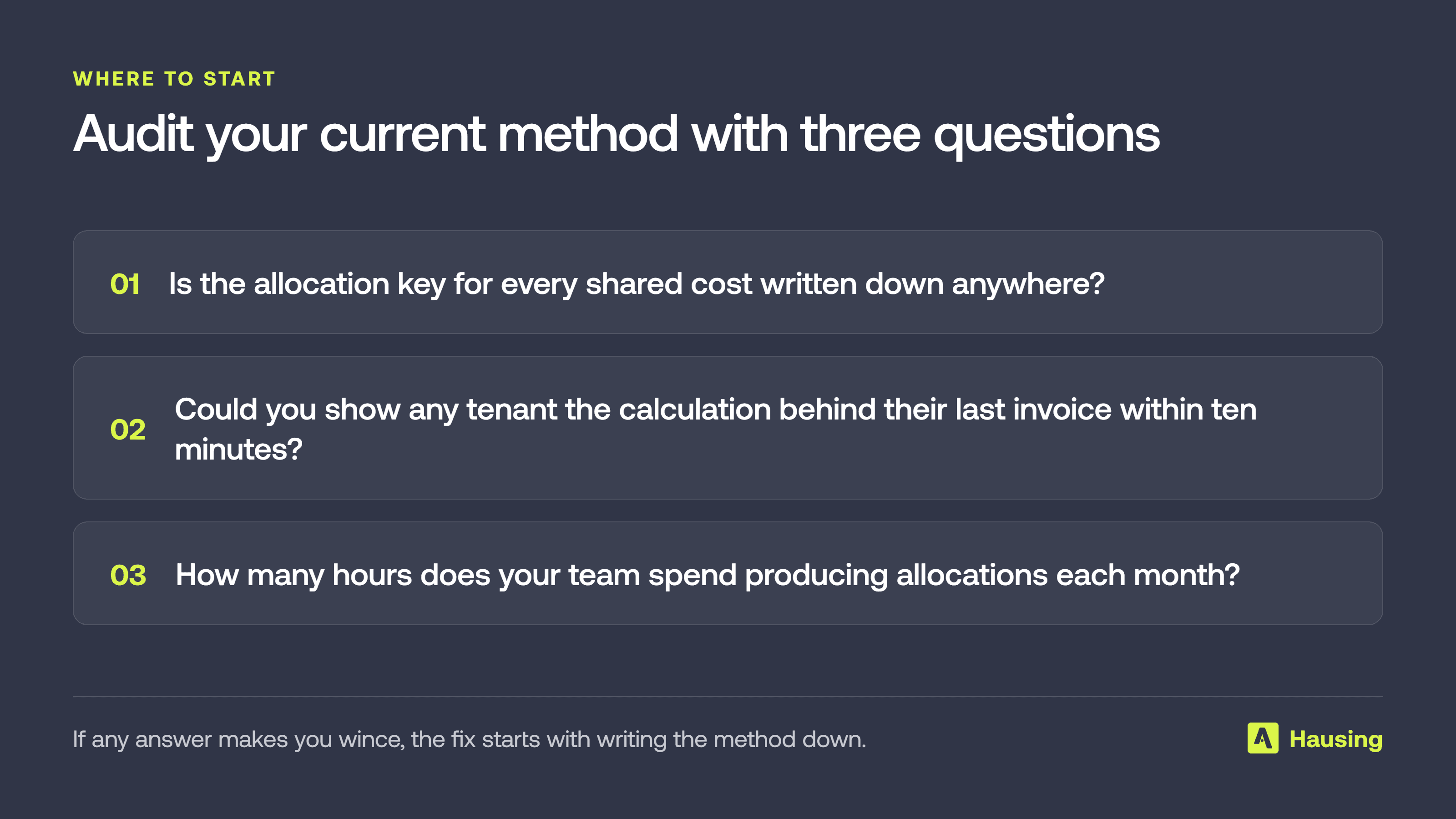
Audit your current method with three questions:
Is the allocation key for every shared cost written down anywhere?
Could you show any tenant the calculation behind their last invoice within ten minutes?
How many hours does your team spend producing allocations each month?
If any answer makes you wince, the fix is well understood - and it starts with writing the method down.
Download the free Utility Allocation template and document your method per cost type - the documentation ends most disputes before they start.
Already documented, still drowning in the monthly mechanics? Book a 20-minute walkthrough with your current allocation method to hand - we'll show you what it looks like automated in Hausing.
Selles artiklis leiad:
Shared utility costs are the most disputed cost in retail property because consumption differences between tenants are extreme and visible. A fair method is documented, consistent and explainable from data - sub-metering where practical, and a written allocation key per cost type where not. Software removes the manual monthly grind and the errors that destroy tenant trust.
Your download is ready
Thanks — here’s the full document. It’s yours to keep and share internally.
Related insights

Oled valmis?
Too kõik töövood ühele platvormile
How do you allocate utility costs fairly in a shopping centre (and stop the arguments)?
Uudised
•
Sisukord
Ole esimene kes kuuleb uutest projektidest ja uudistest
To start off, why are shared utility costs so contested in retail property? Because the consumption differences are extreme and visible. A restaurant's kitchen extraction, a supermarket's refrigeration and a small fashion unit's lighting have almost nothing in common - and every tenant can see the others operating.
When the allocation is a flat split by floor area, the light consumers know they are subsidising the heavy ones. When the method is opaque, everyone assumes they are the one subsidising.
The consequence is predictable: cost queries, delayed payments, service charge disputes, and a residue of distrust that surfaces in every renewal negotiation.
What makes a utility allocation method fair?
Fair does not mean equal. It means three things:
Documented. The method exists in writing: which costs are metered directly, which are allocated, and by what key - floor area, sub-meter readings, opening hours, headcount or a combination per cost type.
Consistent. The same method, applied the same way, every period. Ad hoc adjustments are where trust dies.
Explainable. When a tenant asks "how was my share calculated?", the answer comes from data, in minutes - not reconstructed from someone's memory of what was decided.
Sub-metering is the gold standard where it is practical, because measured consumption ends most arguments before they start. Where sub-metering is not feasible, a documented allocation key per cost type is the next best thing - and the documentation matters as much as the key itself.
Why does this go wrong in practice?
Because in most portfolios the allocation lives in a spreadsheet that one person understands. Complex splits across dozens of units, different keys per cost type, mid-period tenant changes and vacancy adjustments - all handled manually, every single month.
It is slow, error-prone, and completely dependent on that one person being available and right.
BLRT, the industrial holding whose property arm manages the Noblessner Port City district in Tallinn, lived this exact pattern: producing invoices and utility calculations took a full week every month, and when the colleague who ran the spreadsheets left, nobody else could follow her system.
As their administrative manager Ergo Eelmäe put it: "It seemed impossible that in today's world, where everything is digital, we were still using things with multiple Excel sheets."
The errors are the most expensive part. One misallocated invoice, discovered by a tenant, does more damage to trust than a year of correct ones builds.
How does software change utility allocation?
Hausing's utility cost division was built for commercial and mixed-use property, where complex allocations are the norm rather than the exception.
You define the method per cost type once - the platform then allocates each period's costs across units automatically and produces the documentation behind every tenant's share.
Mairo from Cesana described the practical effect: "The system is user-friendly and easy to implement. Thanks to Hausing, the distribution of utility costs is made very easy, and it saves me the most valuable time."
The time savings are not marginal. After moving its utility and lease management into Hausing, BLRT's week of monthly allocation work shrank dramatically. "Tasks that once took a week are now completed much faster. This freed-up time can now be used for more important assignments," said Ergo. Read the full BLRT case study.
The result is not only saved hours. It is that every allocation becomes explainable on demand - which changes cost conversations with tenants from arguments into confirmations. Across its customers, Hausing processes invoices, including rent, worth over €8 million every month, so the allocation engine is exercised at serious volume.
Fair costs are one part of a bigger picture. See how Hausing shapes the full shopping centre tenant experience.
Where should you start?
Audit your current method with three questions:
Is the allocation key for every shared cost written down anywhere?
Could you show any tenant the calculation behind their last invoice within ten minutes?
How many hours does your team spend producing allocations each month?
If any answer makes you wince, the fix is well understood - and it starts with writing the method down.
Download the free Utility Allocation template and document your method per cost type - the documentation ends most disputes before they start.
Already documented, still drowning in the monthly mechanics? Book a 20-minute walkthrough with your current allocation method to hand - we'll show you what it looks like automated in Hausing.
Selles artiklis leiad:
Shared utility costs are the most disputed cost in retail property because consumption differences between tenants are extreme and visible. A fair method is documented, consistent and explainable from data - sub-metering where practical, and a written allocation key per cost type where not. Software removes the manual monthly grind and the errors that destroy tenant trust.
Your download is ready
Thanks — here’s the full document. It’s yours to keep and share internally.
Related insights
Too kõik töövood ühele platvormile