Why is tenant experience in office buildings really a maintenance problem?
News
•

Table of Contents
Be the first to know about our latest projects and news
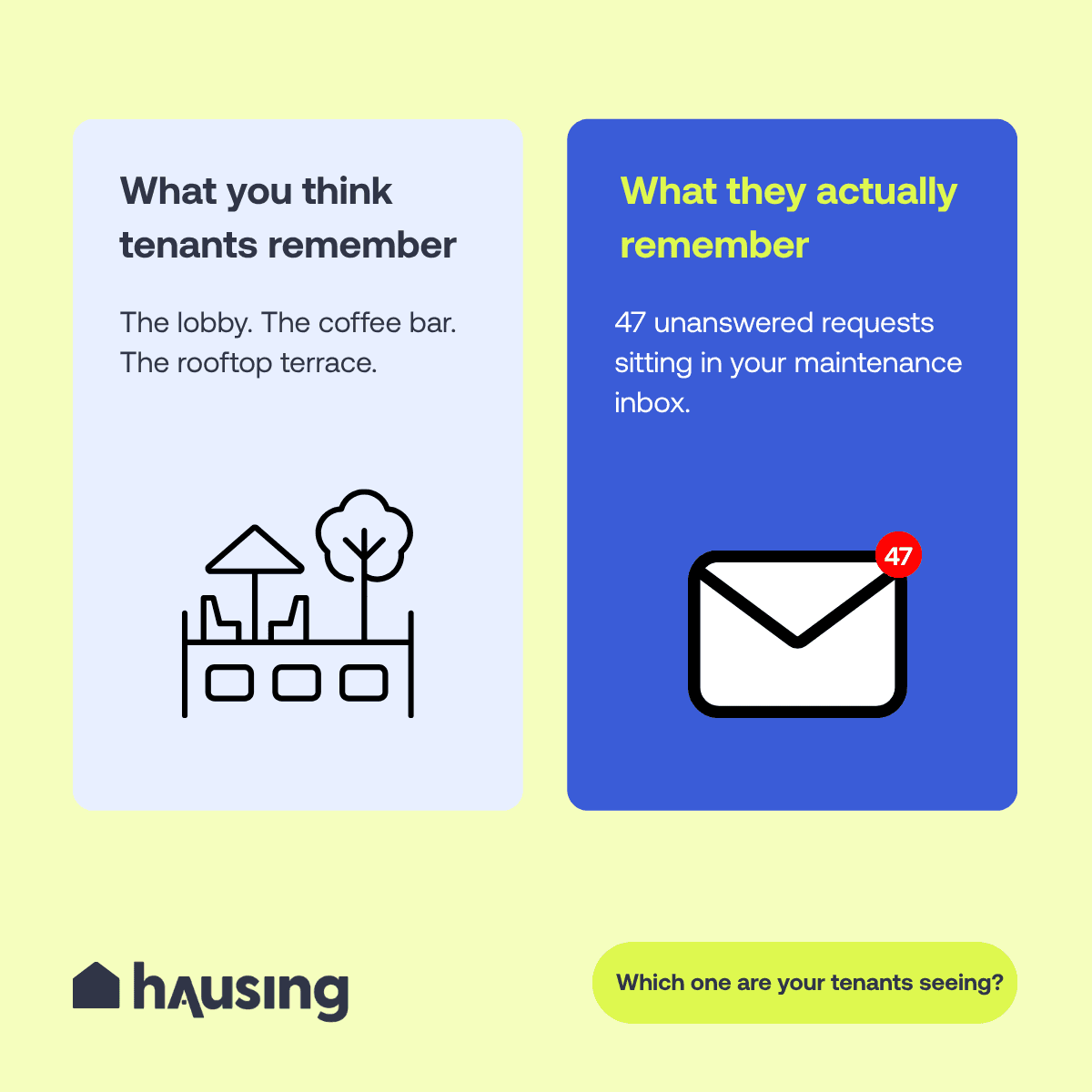
Ask an office tenant what makes a good landlord and they rarely mention the coffee bar or the rooftop terrace. They mention the day the air conditioning broke and how long it took anyone to respond.
That is the uncomfortable truth behind the phrase "tenant experience". Most of it is not designed in a workshop. It happens in the gap between a tenant reporting a problem and that problem being visibly, verifiably fixed.
What actually shapes tenant experience in an office building?
Tenant experience in an office building is the sum of every operational interaction a tenant has with you: how easy it is to report an issue, how quickly someone responds, whether they can see progress, and whether the same problem keeps coming back.
Amenities matter at signing. Operations matter at renewal. A tenant who has spent two years chasing your maintenance inbox will remember that at the negotiating table, whatever the lobby looks like.
Why do maintenance issues damage tenant relationships so badly?
Because of silence, mostly. The fault itself is rarely the problem - buildings break, and tenants know that. What corrodes trust is not knowing:
Did anyone actually receive my request?
Is someone working on it?
When will it be done?
When requests arrive by phone, email and corridor conversations, some inevitably get lost, duplicated or forgotten. Ülemiste City, the largest business campus in the Baltics, knew this pattern well: emails piled up in a shared maintenance inbox, tasks went unread or were duplicated, and people stopped colleagues in the hallway to report issues that were forgotten by the end of a busy day.
Every lost request is a tenant quietly concluding that reporting problems is pointless. That conclusion is expensive: it surfaces later as complaints to the owner, poor word of mouth, and harder renewal conversations.
How do you fix the response gap?
Three changes cover most of the distance.
1. Give tenants one channel, and close the others. Requests scattered across inboxes and phone calls cannot be managed; requests in one system can.
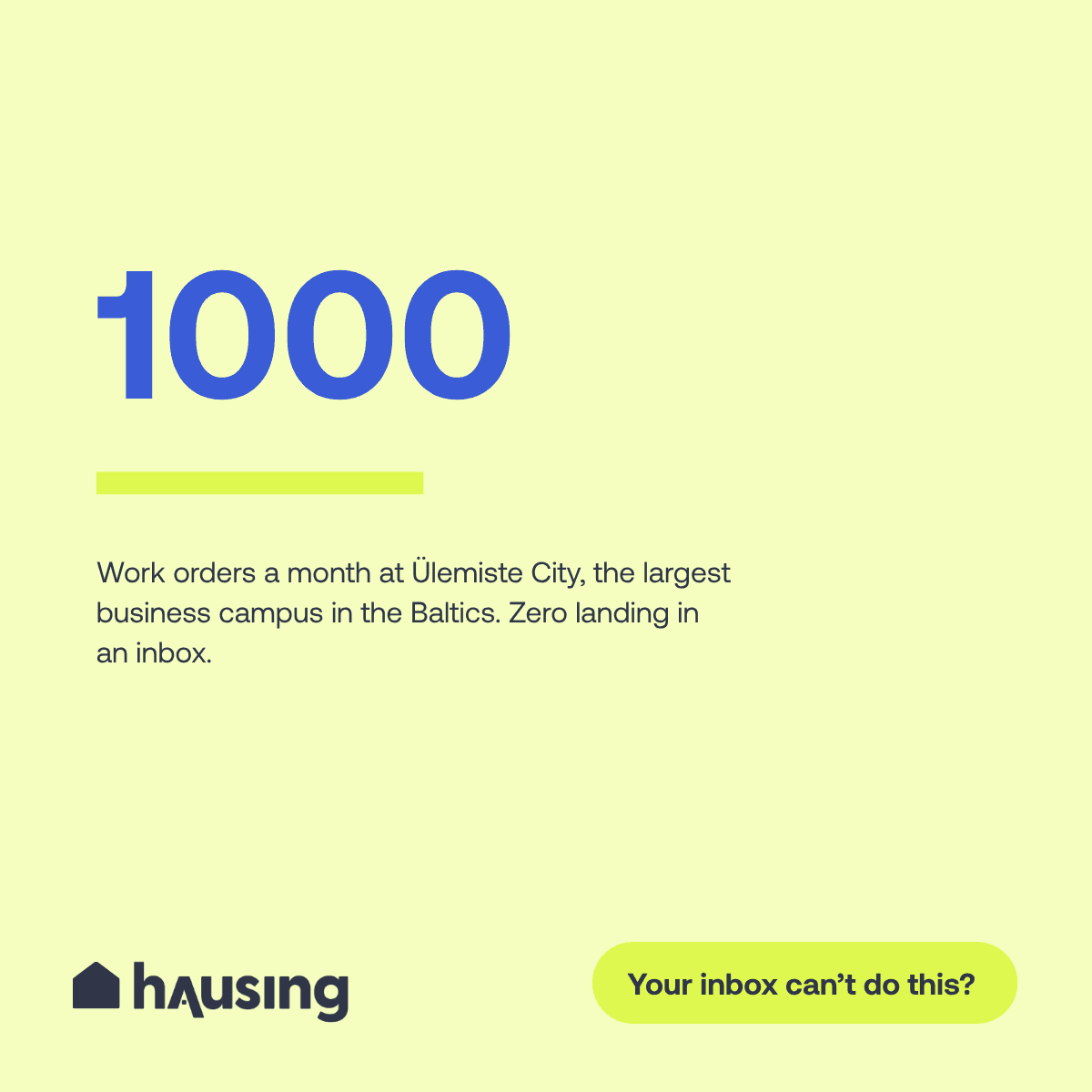
When Ülemiste City moved its maintenance operation into Hausing, the maintenance email inbox was closed entirely. The mantra "Create a ticket in Hausing!" had to be repeated many times, but it stuck. Today every tenant has an account where they create work orders and track them themselves. The campus now handles around 1000 work orders a month through one system.
2. Make progress visible. A tenant who can see that their request is assigned, in progress or completed does not need to call you. Visibility replaces the most time-consuming category of communication - status chasing - with self-service.
3. Track the numbers, not the noise. Once every request lives in one system, you can see incoming task volumes, categories, statuses and deadlines. Recurring issue categories tell you where a repair queue should become a preventive maintenance plan instead.
What does this look like when it works?
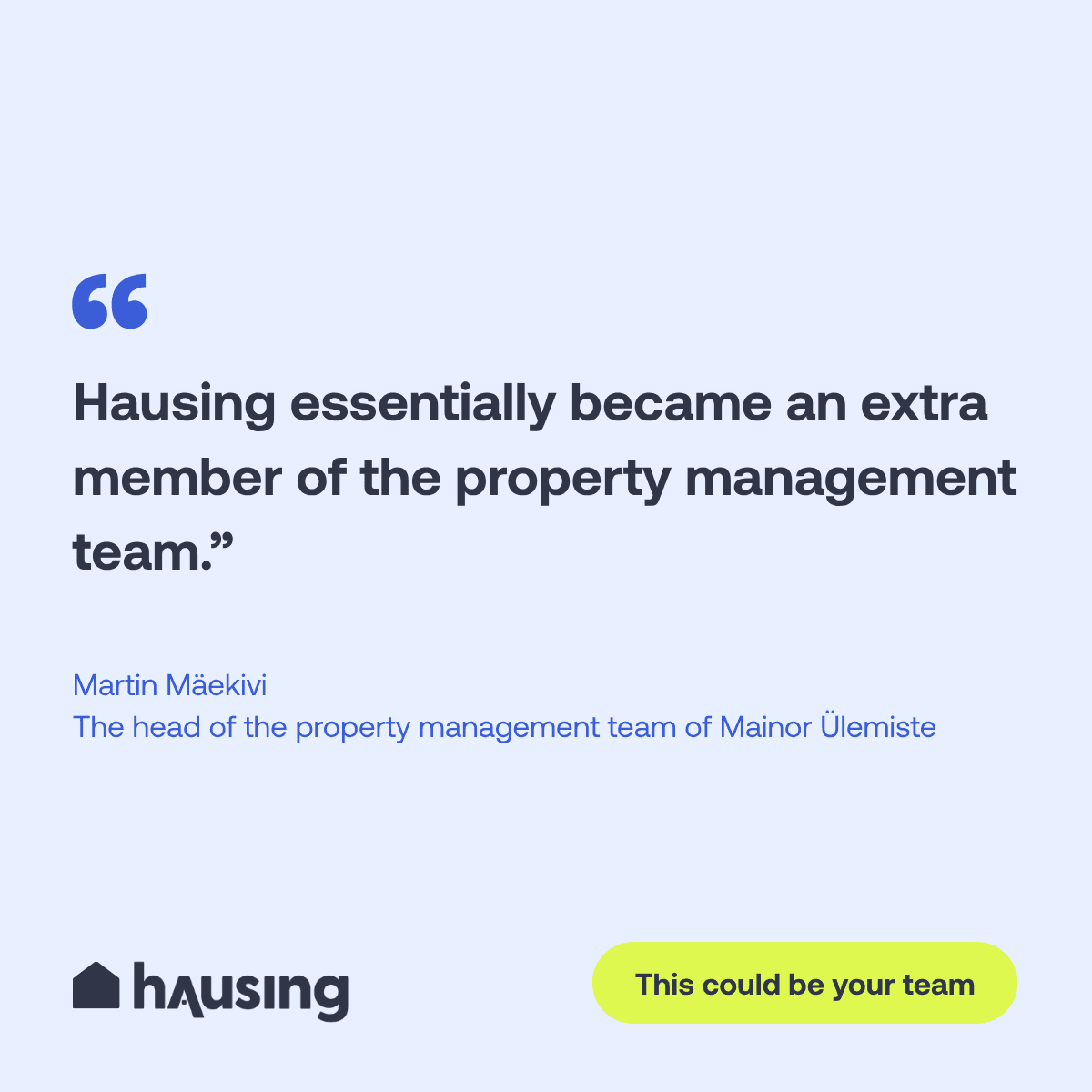
Ülemiste City's maintenance manager put it simply: "Hausing essentially became an extra member of the property management team."
For a smaller operation, the effect is the same at a different scale.
Windhorse Trust, a UK charity managing 15 properties with a two-person team, consolidated a workflow spread across email, spreadsheets and documents into one platform. Since then, the team has logged over 400 work orders with a 90-95% completion rate. As their manager put it, having one place to look means nothing slips between systems.
Where should you start?
Start by counting. For one month, track every tenant request that reaches you, through every channel, and note how many needed a follow-up call from the tenant before anything happened. That number is your tenant experience, measured honestly.
Then fix the plumbing behind it. Hausing gives office operators a single work order system with a tenant portal, contractor portal and real-time analytics. Every request gets an owner, a deadline and a visible status.
See how the largest business campus in the Baltics handles 800 work orders a month without a single one landing in an inbox. Read the Ülemiste City case study.
Ready to close your own maintenance inbox? Start your free trial or book a call with our team.
In this article / TLDR
Tenant experience in office buildings is not built on amenities - it is decided in the gap between a tenant reporting a problem and seeing it visibly fixed. What damages relationships most is silence: not knowing whether a request was received, who is working on it, or when it will be done. The fix is three changes: give tenants one reporting channel and close the others, make progress visible so tenants can check status themselves, and track volumes and recurring categories to turn repair queues into preventive maintenance. Ülemiste City runs 800 work orders a month this way, without a maintenance inbox.
Related insights


Are you ready?
Centralize your property management workflows.
Why is tenant experience in office buildings really a maintenance problem?
News
•
Table of Contents
Be the first to know about our latest projects and news
Ask an office tenant what makes a good landlord and they rarely mention the coffee bar or the rooftop terrace. They mention the day the air conditioning broke and how long it took anyone to respond.
That is the uncomfortable truth behind the phrase "tenant experience". Most of it is not designed in a workshop. It happens in the gap between a tenant reporting a problem and that problem being visibly, verifiably fixed.
What actually shapes tenant experience in an office building?
Tenant experience in an office building is the sum of every operational interaction a tenant has with you: how easy it is to report an issue, how quickly someone responds, whether they can see progress, and whether the same problem keeps coming back.
Amenities matter at signing. Operations matter at renewal. A tenant who has spent two years chasing your maintenance inbox will remember that at the negotiating table, whatever the lobby looks like.
Why do maintenance issues damage tenant relationships so badly?
Because of silence, mostly. The fault itself is rarely the problem - buildings break, and tenants know that. What corrodes trust is not knowing:
Did anyone actually receive my request?
Is someone working on it?
When will it be done?
When requests arrive by phone, email and corridor conversations, some inevitably get lost, duplicated or forgotten. Ülemiste City, the largest business campus in the Baltics, knew this pattern well: emails piled up in a shared maintenance inbox, tasks went unread or were duplicated, and people stopped colleagues in the hallway to report issues that were forgotten by the end of a busy day.
Every lost request is a tenant quietly concluding that reporting problems is pointless. That conclusion is expensive: it surfaces later as complaints to the owner, poor word of mouth, and harder renewal conversations.
How do you fix the response gap?
Three changes cover most of the distance.
1. Give tenants one channel, and close the others. Requests scattered across inboxes and phone calls cannot be managed; requests in one system can.
When Ülemiste City moved its maintenance operation into Hausing, the maintenance email inbox was closed entirely. The mantra "Create a ticket in Hausing!" had to be repeated many times, but it stuck. Today every tenant has an account where they create work orders and track them themselves. The campus now handles around 1000 work orders a month through one system.
2. Make progress visible. A tenant who can see that their request is assigned, in progress or completed does not need to call you. Visibility replaces the most time-consuming category of communication - status chasing - with self-service.
3. Track the numbers, not the noise. Once every request lives in one system, you can see incoming task volumes, categories, statuses and deadlines. Recurring issue categories tell you where a repair queue should become a preventive maintenance plan instead.
What does this look like when it works?
Ülemiste City's maintenance manager put it simply: "Hausing essentially became an extra member of the property management team."
For a smaller operation, the effect is the same at a different scale.
Windhorse Trust, a UK charity managing 15 properties with a two-person team, consolidated a workflow spread across email, spreadsheets and documents into one platform. Since then, the team has logged over 400 work orders with a 90-95% completion rate. As their manager put it, having one place to look means nothing slips between systems.
Where should you start?
Start by counting. For one month, track every tenant request that reaches you, through every channel, and note how many needed a follow-up call from the tenant before anything happened. That number is your tenant experience, measured honestly.
Then fix the plumbing behind it. Hausing gives office operators a single work order system with a tenant portal, contractor portal and real-time analytics. Every request gets an owner, a deadline and a visible status.
See how the largest business campus in the Baltics handles 800 work orders a month without a single one landing in an inbox. Read the Ülemiste City case study.
Ready to close your own maintenance inbox? Start your free trial or book a call with our team.
In this article / TLDR
Tenant experience in office buildings is not built on amenities - it is decided in the gap between a tenant reporting a problem and seeing it visibly fixed. What damages relationships most is silence: not knowing whether a request was received, who is working on it, or when it will be done. The fix is three changes: give tenants one reporting channel and close the others, make progress visible so tenants can check status themselves, and track volumes and recurring categories to turn repair queues into preventive maintenance. Ülemiste City runs 800 work orders a month this way, without a maintenance inbox.
Related insights
Centralize your property management workflows.